
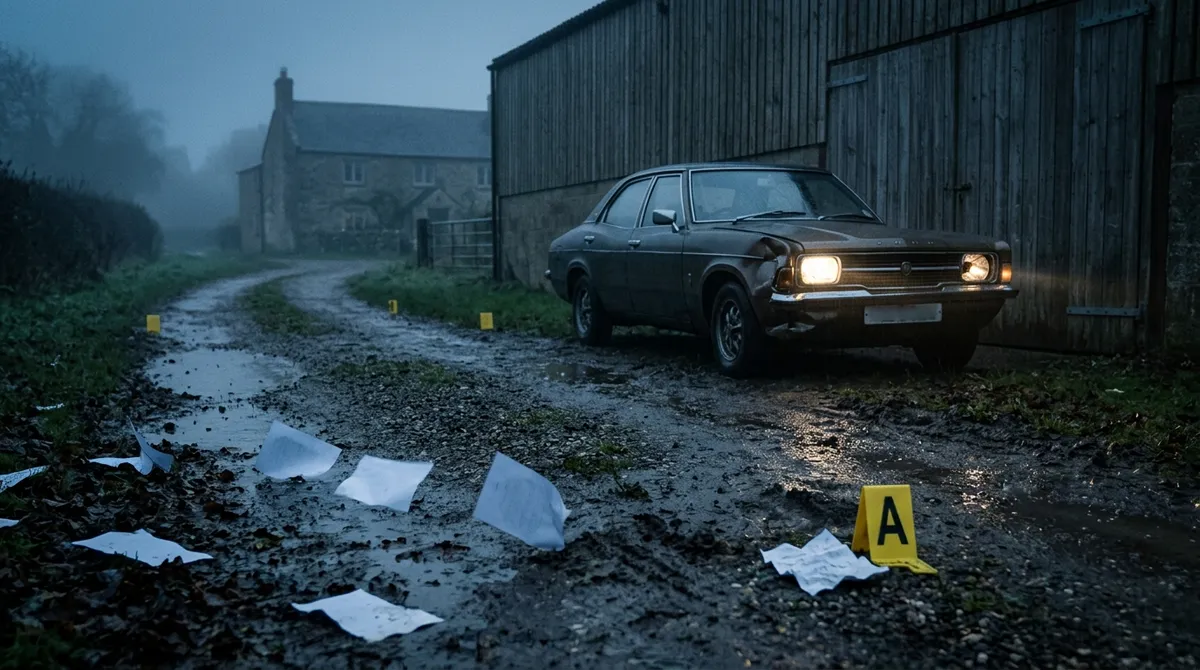
When Farm Life Turned Deadly
A quiet English dairy farm became the setting for a chilling true-crime story that escalated from mysterious threatening notes to attempted murder, according to reports of the Graham Backhouse case. The story demonstrates how seemingly minor threats can spiral into life-threatening violence when warning signs are overlooked.
Graham Backhouse found himself running a dairy farm he never wanted after inheriting the property. According to reports, he struggled to keep the operation financially viable, setting the stage for what would become a nightmare scenario for his family.
The Threatening Messages Begin
The terror campaign against the Backhouse family reportedly started with threatening notes arriving at their property. These initial messages marked the beginning of what would become an increasingly dangerous pattern of harassment targeting the farming family.
While the exact content of the early notes hasn't been detailed in available reports, they represented the first warning signs of the violence that was to follow.
Escalation to Gruesome Threats
The situation took a dramatically darker turn when the perpetrator left a severed lamb's head on the property, according to reports. The macabre display came with a chilling message: "You next." This graphic threat marked a clear escalation from written warnings to physical intimidation designed to terrorize the family.
The lamb's head incident demonstrated that whoever was targeting the Backhouse family was willing to move beyond psychological warfare into more concrete and disturbing forms of threat.
The Car Bomb Attack
The threatening campaign reached its most dangerous point when a bomb was planted in Graham's car, according to reports. The explosive device severely injured his wife Margaret when it detonated, nearly killing her in what appeared to be an attempted murder.
The bombing represented the culmination of the escalating threat pattern that had begun with the mysterious notes. The attack transformed what had been a campaign of intimidation into a clear attempt on the family's lives.
Police Response Under Scrutiny
According to reports, police had been alerted to the threats before the bombing occurred, but appeared slow to act on the warnings. This delayed response has become a focal point in discussions about how law enforcement handles escalating threat situations in rural communities.
The case highlights questions about whether more aggressive early intervention might have prevented the near-fatal attack on Margaret Backhouse.
Why Rural Crimes Captivate Audiences
The Backhouse case exemplifies why true-crime audiences are particularly drawn to rural "quiet town" cases where ordinary lives hide sinister motives, according to reports. These stories tap into current interest in psychological stalking and mystery-thriller cases that often feel stranger than fiction.
The rural setting adds an extra layer of unease to the story, as farming communities are typically associated with safety and neighborly trust rather than calculated violence.
Lessons from an Escalating Threat
The progression from mysterious notes to attempted murder offers insights into how small warning signs can escalate when threats are ignored or inadequately addressed. The case serves as a stark reminder that psychological harassment campaigns can quickly turn deadly.
According to reports, the story provides material for examining how real-life rural crimes can feel especially unsettling compared to their fictional counterparts, often because the mundane setting contrasts sharply with the sinister events that unfold.
The Backhouse case remains a compelling example of how quickly a campaign of intimidation can spiral into life-threatening violence, particularly when early warning signs aren't taken seriously by authorities or don't receive adequate intervention.